
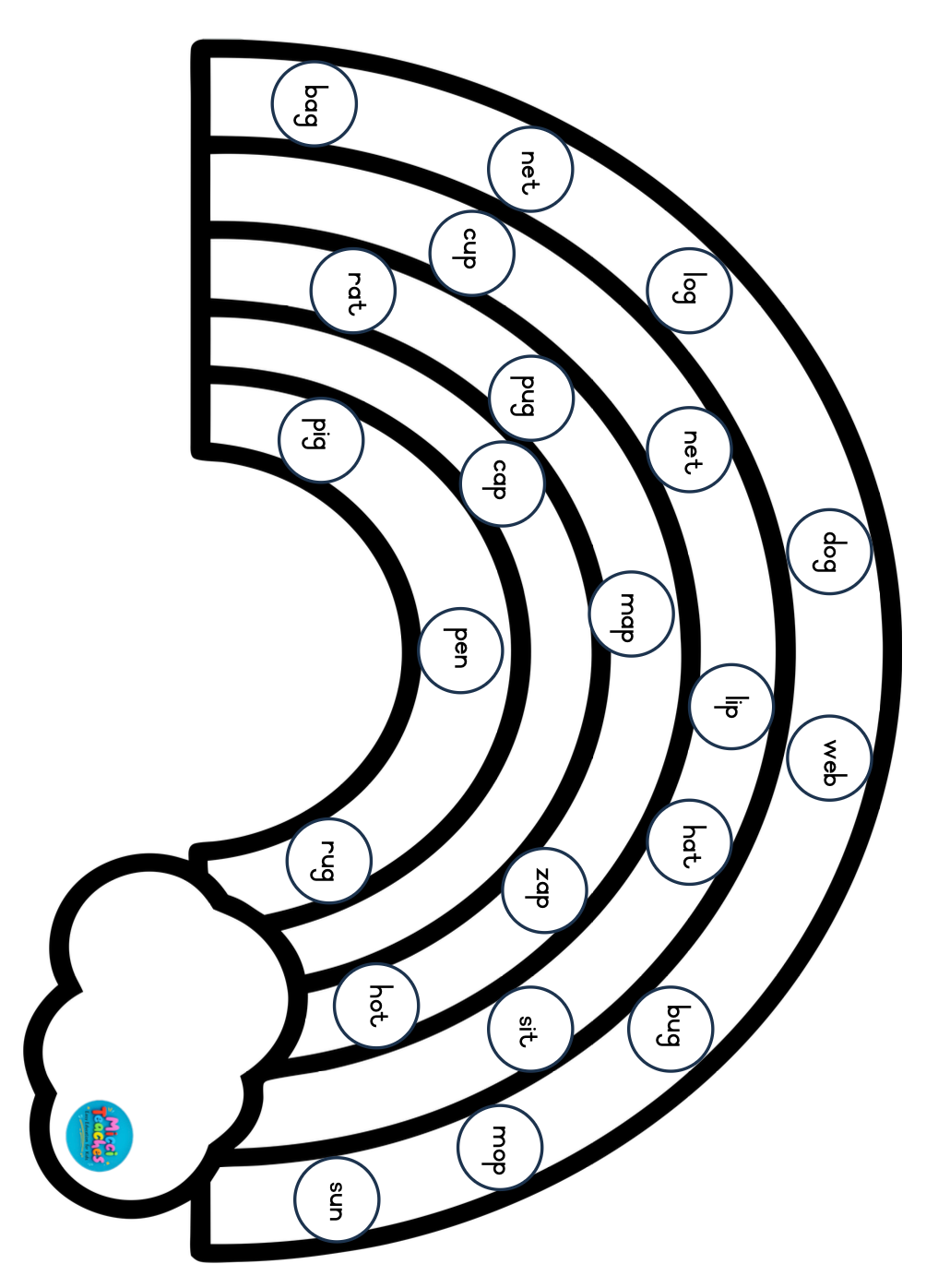
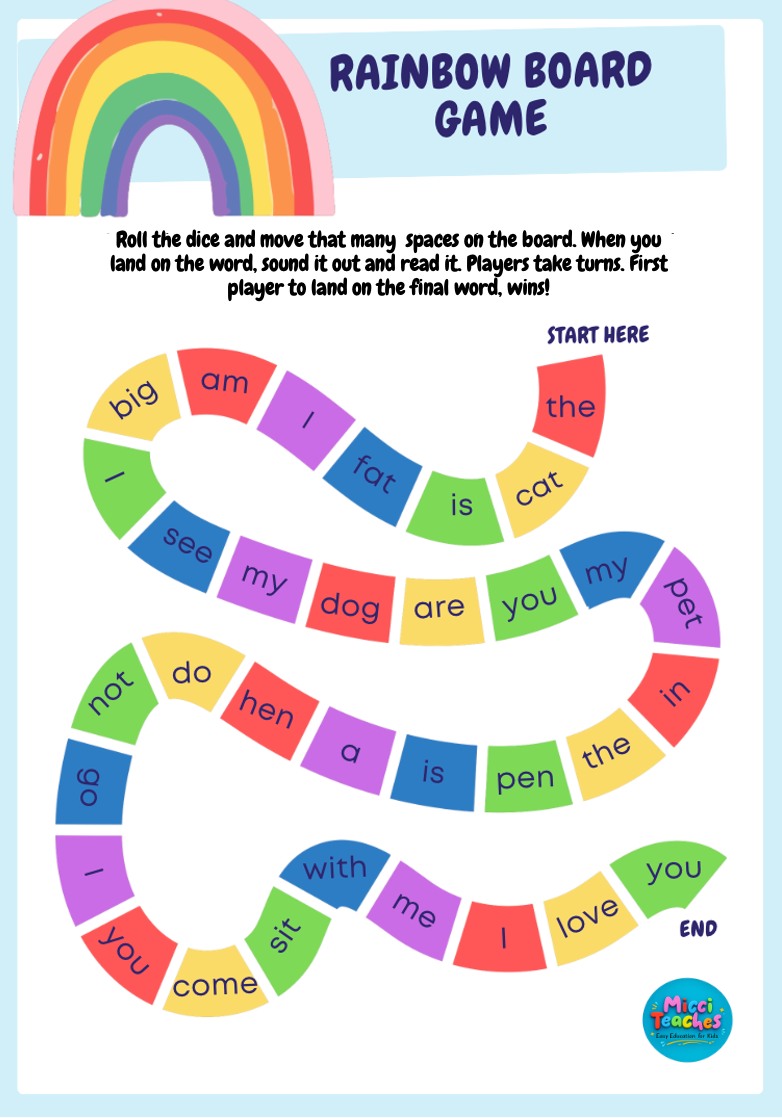
Find and Colour – CVC Words + Board Games
R55,00
Why adding board games makes it even better 🎲 Board games add the ingredient that keeps practice happening: motivation. More repetitions without fights Lower anxiety (especially for struggling readers) Better attention and persistenceGame-based learning shows meaningful gains in engagement and cognitive outcomes, which supports learning sticking over time. Why this is especially helpful for dyslexic readers Dyslexic readers often need: more repetition clear, step-by-step decoding less visual overload confidence-building practiceCVC rainbow activities + games give all of that in a calm, fun loop: practice → success → confidence → more practice.
Find & Colour CVC Rainbow Words + Board Games
Why this activity is absolutely essential for beginner readers and dyslexic readers
This is not “just colouring” or “just a game”. It’s a mini reading lesson disguised as play
Why CVC “rainbow words” matter so much
CVC words (consonant-vowel-consonant) are where reading becomes real decoding, not guessing. Words like cat, sun, lip teach a child the core engine of reading:
hear the sounds → map them to letters → blend → read.
That sound-by-sound work builds phonemic awareness and early decoding in the simplest, clearest way.
Why “find and colour” is powerful
1) It trains the eyes to track and focus
Beginner readers often lose their place, skip letters, or “see” words as a blur. Searching for the word and then colouring it forces the brain to lock onto the correct sequence.
2) It strengthens sound-to-letter mapping (without pressure)
When kids colour each sound or each part, they practice phoneme–grapheme mapping (the real spelling and reading bridge).
3) It adds multisensory learning
Dyslexic readers often need learning to be explicit, structured, and multisensory (see it, say it, do it). Activities like this match that “structured literacy” style of teaching.
*(Quick note for accuracy: research reviews show mixed results when programs are labeled “Orton-Gillingham,” but the components like explicit phonics, phonemic awareness, and multisensory practice are widely used in structured approaches.)