


Alphabet Train -Uppercase and Lowercase Letters – Both in English and Afrikaans
It strengthens letter–sound mapping Letters are not just shapes. They carry sounds 🔊 When children: See the letter Say the sound Match uppercase to lowercase Move the train cars They are engaging visual, auditory, and motor systems at the same timeThat’s multisensory learning at its best. It strengthens letter–sound mapping Letters are not just shapes. They carry sounds 🔊 When children: See the letter Say the sound Match uppercase to lowercase Move the train cars They are engaging visual, auditory, and motor systems at the same timeThat’s multisensory learning at its best.
Why it’s so important to practise
Think of the alphabet as a train track.
If even one rail is missing, reading becomes wobbly.
Practising uppercase and lowercase letters together is not busy work. It is brain wiring.
Reading happens in lowercase
Most books are written in lowercase letters.
If a child only knows A but not a, reading feels like decoding a secret code instead of a story 📖
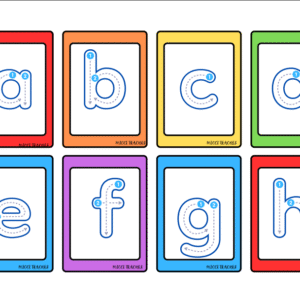
➡️ Matching A–a, B–b, C–c builds instant recognition.
Writing starts with uppercase, flows into lowercase
Children need to know:
-
Uppercase = start of a sentence ✍️
-
Lowercase = the rest of the word
When this isn’t clear, you’ll see:
-
Random capital letters in the middle of words
-
Slow, effortful writing
-
Frustration and avoidance
The Alphabet Train makes this rule visual and playful, not abstract.